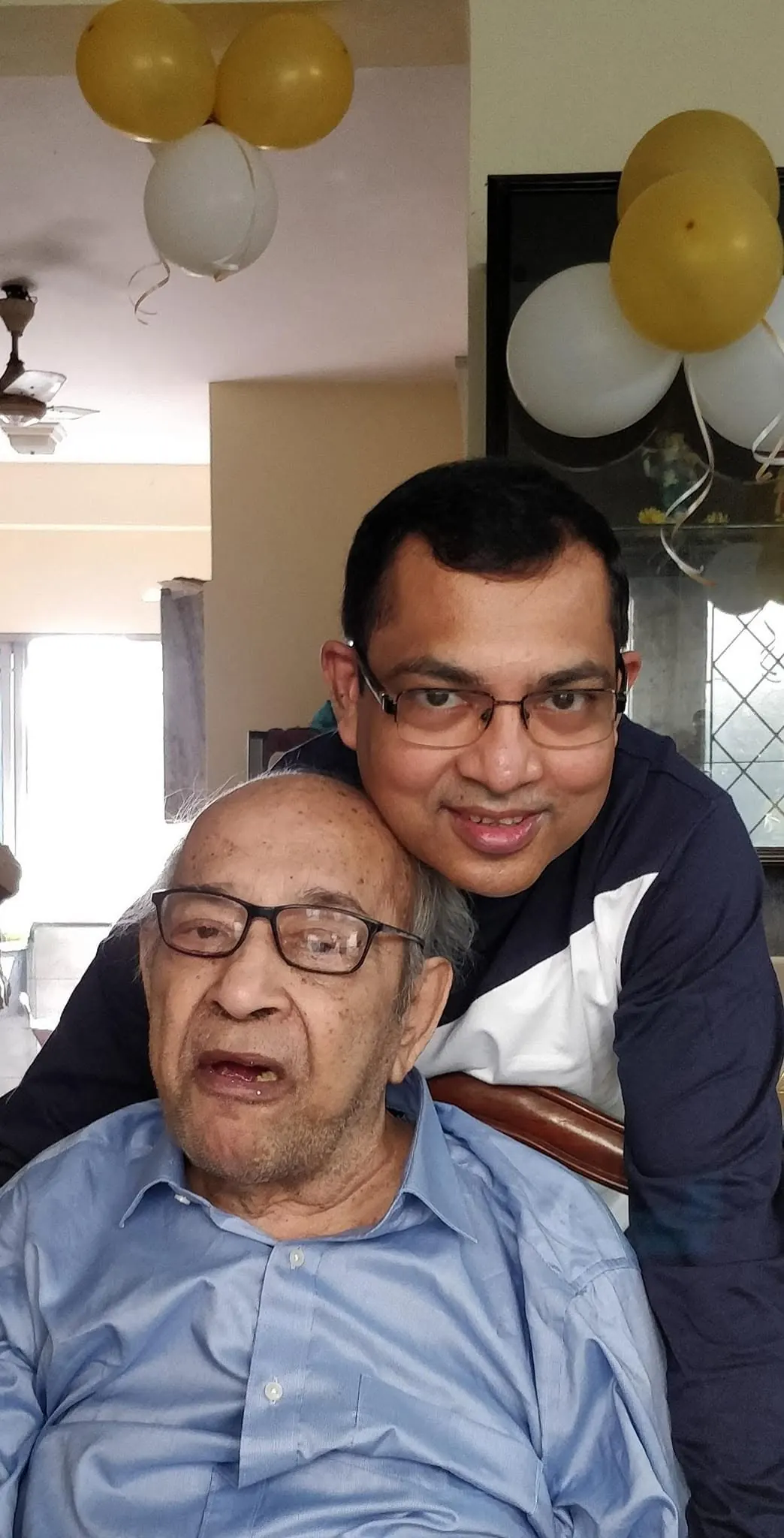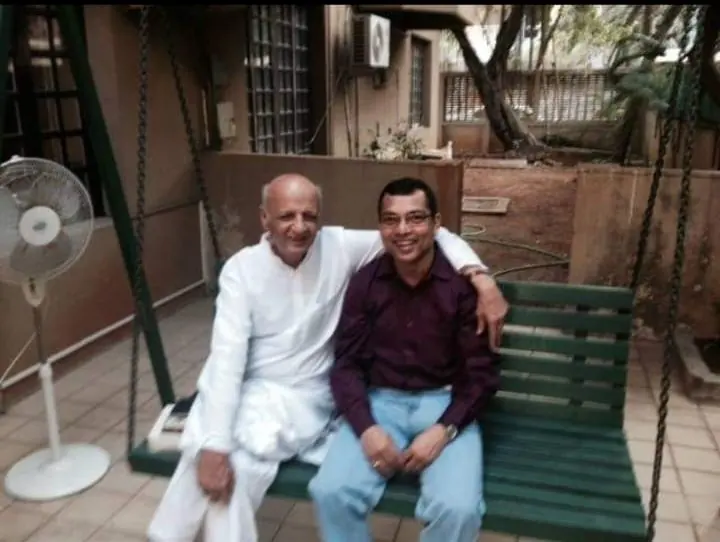
Dr. M. L. Shrikant mentored me and shaped me as a teacher and an institution builder. As a teacher, I matured in SPJIMR. How to look at programmes, at collaborations, at pedagogy: as an institutional leader, I matured a lot because of his mentorship.
This is everything I have written about him, in one place.
Who he was.
Dr. Shrikant was Honorary Dean of SPJIMR from 1987 to 2014. He had studied at Michigan Tech, the University of Illinois, Cornell and Harvard, and had been a young CEO of Mukand Ltd in the 1970s. For over 25 years he served SPJIMR for an honorarium of one rupee a month. He avoided recognition, and his name does not appear anywhere on the campus. To me he was a Karmayogi.
He played a pioneering role in building SPJIMR as one of the top global schools from India (Top 40 in FT). He believed SPJIMR could not beat the IIMs at their own game, so it needed a mission of its own. He built a “bootstrapped” institution and made it at par with the global best.
What he started, now global benchmarks
- DOCCSocial Immersion
- Autumn Internship
- AbhyudayaMentoring of underprivileged school children by MBA participants
- ADMAPAssessment and Development of Managerial and Administrative Potential
- Spirituality in ManagementTwo decades ahead of any other school in India
- Family Managed Business ProgramMuch before India woke up to the reality of family businesses
He pushed me through promotions, sent me to teach abroad, and sent me to Harvard to train as a teacher. He cared about developing his faculty more than almost anything else.
It is a leadership that is enlightened: it conceives a purposeful vision, induces self-introspection leading to self-development, promotes collaborative working, and focuses on the long-term development of organizations along with the development of people.My essay, 2024
Five questions before a decision.
As institution leaders, we often are faced with dilemma while taking decisions. I refer to the five questions that Dr. M L Shrikant asked me when I had approached him to guide me on this. The decision must lead to an affirmative response to each of the five questions.
Is it good for the institution in the long run?
YesMakes everyone/majority happy? (no one will cry)
YesDoes it meet the statutory requirement/s?
YesIs not seen as being vindictive?
YesDemonstrates decisiveness?
Yes- Then decide.
As I complete a decade in leadership role across multiple institutions, I find that the criteria laid down by Dr. Shrikant has allowed me to reduce the post decision dissonance, which is so very crucial to remain at peace with oneself.
Three questions before any initiative.
What were the criteria used by Dr. Shrikant while deciding to undertake an initiative? The answer lies in the three questions that he used to ask.
- 1Is the initiative unique?
- 2Is it of global standards?
- 3Is it sustainable?
This is probably the reason why the initiatives undertaken by him have passed the test of time long after he is gone. It should NOT be something like ‘flavor of the day’.
How he tested a new programme.
Colleagues often ask me for guidelines for evaluating a new program. After the three questions, he would evaluate it on four things. His example was the Family Managed Business program, whose faculty and pedagogy he made distinctively different from the regular PGDM.
- 01 · Strategic logic
For the Family Managed Business program: the participant (next generation) should be able to grow the business five times in five years post graduation.
- Does it meet the criteria of mission alignment?
- Does it have the potential for customization and market development?
- What will be the impact on brand equity?
- 02 · Pedagogy
To make the participants appreciate and understand the role of a functional manager and NOT learn to be a functional manager.
- What is business?
- What is my business?
- What will be my business?
- 03 · Faculty
Those who can speak the language of Indian family businesses, who can act like mentors both to the participant and also to the family, and who will teach from a business perspective, solving actual business issues in class.
- 04 · Organisation
How to maintain differentiation at the program level and integration at the institutional level, and how to keep developing products without losing focus on developing markets.
Three qualities of a leader.
Dr. M L Shrikant often used to tell me to develop three qualities, which according to him are essential for a leader. As ambiguity and imperfection is now an everyday reality, I have started appreciating the value of his wisdom.
Today’s leaders must make decisions amid incomplete data, shifting goals, and rapid technological evolution. Leaders today, need to act decisively without being obsessed by the pursuit of perfection.
Leaders need to accept that they neither know nor can they do everything. Hence, acceptance of difference, in skills, perspectives, and even shortcomings, can become a source of strength.
Coined by Herbert Simon, ‘satisficing’ means opting for a “good enough” solution when the ideal is unattainable or too costly. In a disrupted world, ‘satisficing’ is not mediocrity. It has become strategic realism.
Together, these traits represent a shift from the leader as a perfectionist planner to an adaptive learner.
Spirituality in Management.
I often attended, and occasionally assisted, when he delivered the course “Spirituality in Management” at SPJIMR, almost twenty years ago. Students would frequently ask a simple but probing question: “Why this course?” His response always began by reframing the purpose of management education itself.
Management is about money, purpose, and people.
Outstanding managers need not have a very high IQ. Instead, they possess very strong EQ: knowing and managing oneself, empathizing with feelings of others, understanding the social and political dimensions of human behavior. Dr. Shrikant articulated spirituality not as belief, but as inner development.
- Spirituality is linked to individual growth and commitment to higher and finer goals
- It provides a path for progress, irrespective of where one begins
- There is a clear correlation between spirituality and internal well-being
- Feelings of peace and self-worth are connected to spiritual progress
- Reflection, introspection, and meditation are vehicles for such growth
Today, as Indian Knowledge Systems find formal recognition in curricula, it is worth remembering pioneers who quietly laid the foundations.
AND, not OR.
He taught me to replace OR with AND: to combine contradictions instead of choosing between them.
And he preferred doing to elaborate planning:
An idea can be vague, the plan can be imperfect, but good execution can make a vague idea and an imperfect plan look great.Dr. M. L. Shrikant
His teachings remain.
Dr. Shrikant left for his heavenly abode on 16th October 2015. However, his teachings remain immortal and I consider myself fortunate for being mentored by him. We, the community of management educators, probably need to study Dr. Shrikant much more than what we do today.
He will be remembered for giving Indian management education a global perspective in terms of creating a differentiated value proposition, unique to the Indian context.
Read my tribute to Dr. Shrikant on MBAUniverse, or my SPJIMR years in my journey.
Source: My LinkedIn post 'Criteria for Decision Making?' (16 Oct 2024); my Facebook posts on his birthdays and anniversaries; my essay 'Qualities of those who lead academic institutions' (2024); my tribute to him on MBAUniverse.