
IMT Ghaziabad, since February 2025
What I am working on now.
My position for the institute: "A Professional School Contributing to the Knowledge Economy".
IMT Ghaziabad, in numbers
What has changed.
IMT Ghaziabad
#59
globally, FT Masters in Finance 2026. IMT entered the ranking in 2025.
IMT Ghaziabad
#86
globally, FT Masters in Management, on returning to it.
IMT Ghaziabad
#25
worldwide for teaching cases, Financial Times 2026.
IMT Ghaziabad
#20
globally and #1 in India for Career Progress, FT Masters in Management 2026. Up from #41 in 2024.
As I reported on 8 Sep 2026
IMT Ghaziabad
#1
in India, FT Masters in Finance 2026. Up seven places globally.
As I reported on 15 Jun 2026
IMT Ghaziabad
3
international accreditation frameworks we are seeking alignment with: AACSB, EQUIS and AMBA.
Rankings are not an end in themselves. However, career progression is a meaningful measure of the enduring value of management education.
Since February 2025.
Two years, one line for each moment that mattered.
2025The first year8 moments
- Feb Returned to IMT Ghaziabad as Director→
- Mar Centre for Financial Markets, with NISM
- Apr A new mission, KITES, and a new identity→ Knowledge, Innovation, Tech-readiness, Entrepreneurial mindset, Sustainability

- Jun The PGDM class of 2025, on the new curriculum
- Jul IMT Ghaziabad Alumni Association formed
- Aug Case-teaching seminar with HBS Prof. V. G. Narayanan
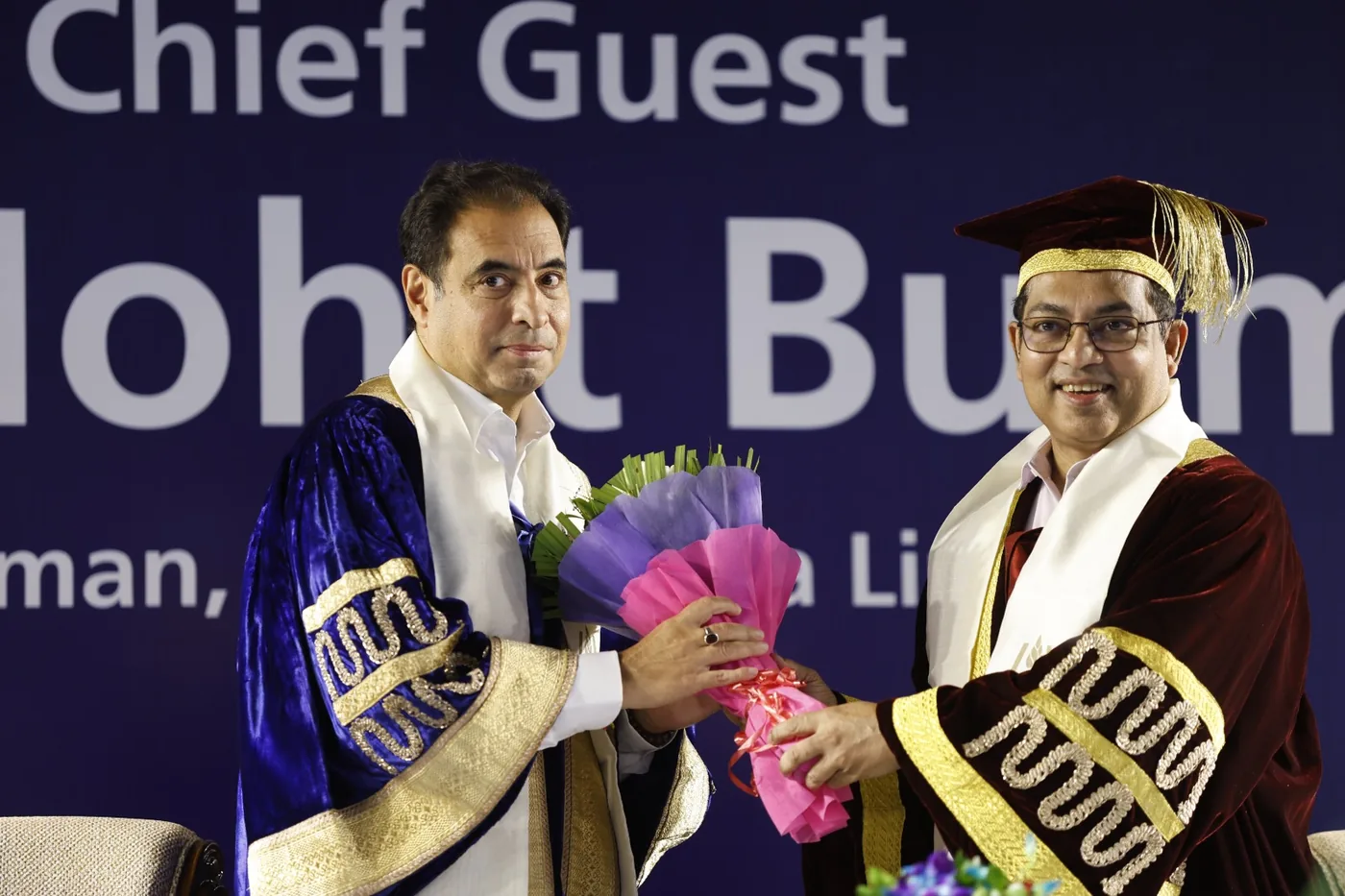
- Oct Convocation, with Mohit Burman of Dabur→
- Dec Directors' panel, ISDSI-Global, IMI Kolkata→ “Learning to Learn is a key competency in the age of AI.”

2026The second year7 moments
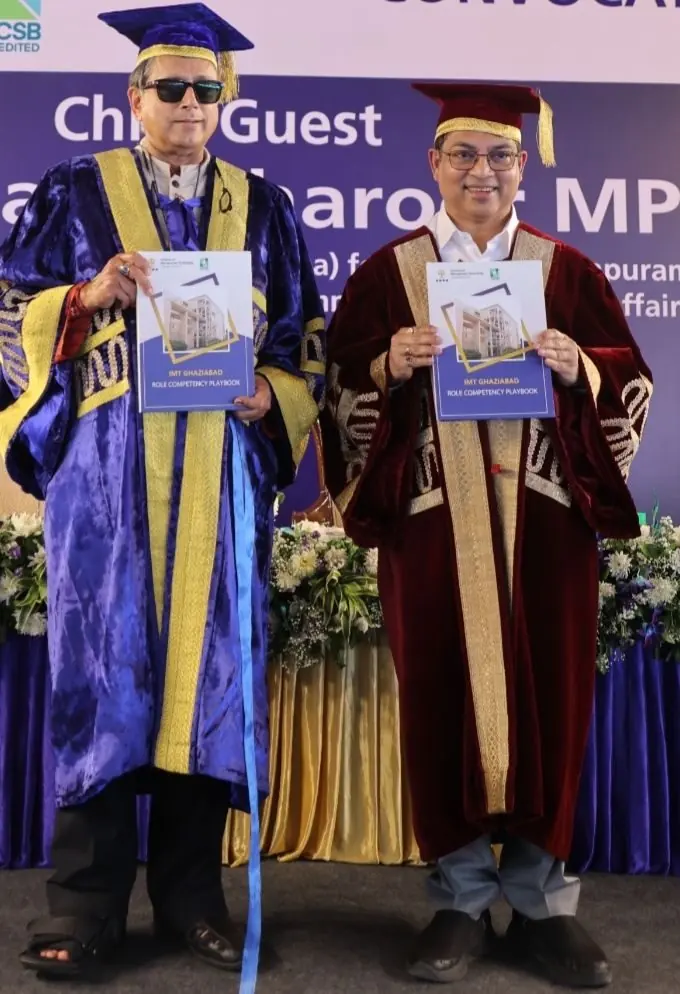
- Apr Convocation, and the Role Competency Playbook, with Dr. Shashi Tharoor→
- Jun FT Masters in Finance: #59 globally, #1 in India→
- A refreshed curriculum for the Dual Country Program With work-integrated learning from Term 5
- Jul Welcomed the PGDM class of 2026→
- Aug Ivey publishes our case on a student start-up, Teamoure Iced Tea→
- Sep Back in the FT Masters in Management, #1 in India for Career Progress→
- Oct #25 worldwide for teaching cases, Financial Times→
From teaching subjects to building role readiness.
Companies today hire for roles, not labels. So our Role Competency Playbook starts with real job descriptions and works backwards to courses, projects and mentoring.
The curriculum should make a promise it can evidence, while remaining larger than any evolving job description.
How the playbook works
We map the technical, functional and behavioural competencies a role needs, then align courses, projects, tools and certifications to them. Each learner has an Individual Development Plan that connects aspirations, capability gaps and learning choices through mentoring.
Role specificity sits above, not instead of, a foundation in disciplinary knowledge, judgment, responsible leadership and global awareness. Its impact on learning, equity and employer satisfaction still requires validation.
Six layers of capability
ConceptualKnowledge of the disciplines.
ApplicationCases and simulations.
ProfessionalProjects and internships.
PersonalSelf-awareness and development.
SocialCommunity engagement.
GlobalIntercultural exposure.
The DCP Program
The Dual Country Program: one programme, three places to learn.
June 2026A refreshed curriculum, with work-integrated learning from Term 5.
International pathways
27 partners in 12 countries.
Internationalisation is designed into learning, not added as travel. We are also seeking alignment with three international accreditation frameworks: AACSB, EQUIS and AMBA.
- 27
- pathway and executive-education partners, in 12 countries
- 52
- students on exchange, at 10 partner schools
- ~75
- international visiting faculty
- 207
- graduates of the Dual Country Program








































One BKC, Mumbai
The Centre for Financial Markets.
Learning moves closer to where finance happens. The Centre adds financial-markets, analytics and emerging-technology resources to the classroom.
Financial marketsLive resources from the market itself
Analytics and technologyEmerging-technology tools for finance
Design thinkingInterventions beyond the screen
Personal growth and sustainabilityThe person alongside the professional
Research priorities
Four questions IMT will work on.
People and markets
Consumer behaviour, customer experience and market transformation.
Responsible business
Responsible, sustainable and inclusive business.
AI and the future of work
AI, digital transformation and the future of work.
Finance and resilience
Financial markets, enterprise transformation and resilient value chains.
The emphasis is on measuring outcomes and impact, beyond publication output.
An institution is its people.
Institutions are ultimately measured not by their buildings, rankings, or achievements, but by the impact they have on the lives of the people who dedicate themselves to them.


